Storm response mode, built in from day one
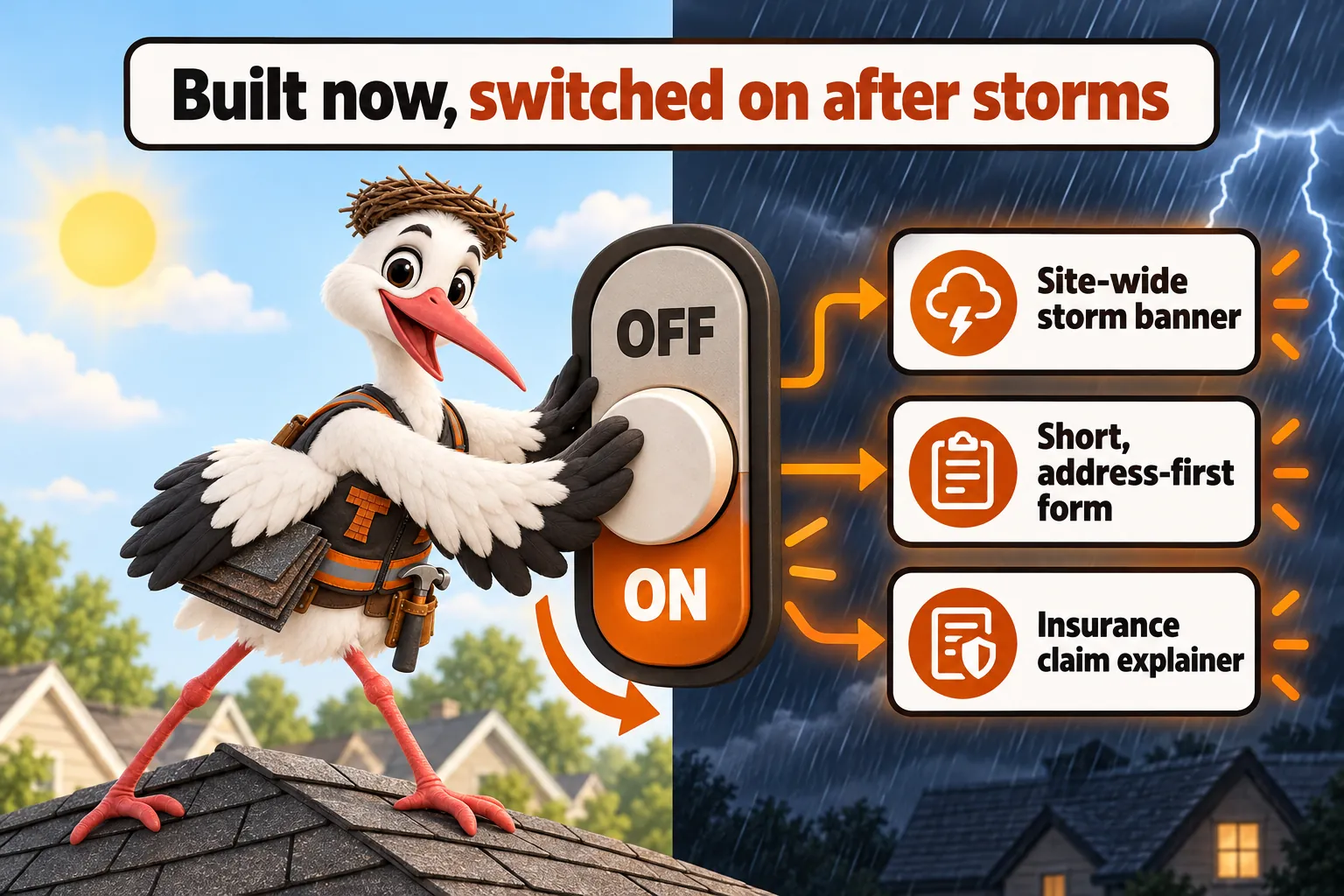
A banner and shortened form your team switches on the morning after a storm, off once the surge passes.
Who we build forPick the roofing business you run
ServicesHow the site gets built and found
The offerWhat it costs and what you get
MoreReading, answers and a person to talk to
Theme
Accent
Saved on this device only.
Storm restoration website design succeeds by being built ahead of time to flip into a rapid-response state, since every roofer in the area gets a surge of calls in the same 48 hours and speed is the entire competitive advantage.
What it costs
It means the storm response banner, the shortened address-first form, and the insurance claim explainer page already exist on day one, sitting quiet until you need them. A design built after the fact, scrambled together during the surge, is slower and less consistent than one built in advance and simply switched on.
A homeowner looking at storm damage is often anxious and unfamiliar with the insurance process. The design leans calm and specific rather than aggressive: clear steps, a real phone number, and language that explains rather than pressures. That tone converts better with this particular buyer than urgency-heavy sales copy, and it holds up better under scrutiny from an insurance adjuster who might also read the site.
Storm restoration sales often happens door to door in the affected neighborhood. The design includes a fast-loading, mobile-first landing experience that a canvasser can hand a homeowner a card or QR code pointing to, without asking them to navigate a full site menu first.
A banner and shortened form your team switches on the morning after a storm, off once the surge passes.
A general, sourced explanation of how a roof insurance claim typically proceeds, written in plain language.
Something a door-to-door rep can point a homeowner to that loads instantly and asks for almost nothing.
Built ahead of storm season so they already exist and rank by the time a storm actually hits.
The specific proof a storm-anxious homeowner is looking for, not a generic project feed.
Answer: everything on this page is part of every plan. Ridge adds the AI Engine, the receptionist, chat widget, missed-call text back and appointment booking, and Peak adds the Content Engine on top of that.
Deck
$127/ month
The website, built and managed: town and service pages, gallery, forms, hosting and 2 articles a week. Live in 7 days.
Ridge
$267/ month + usage
Everything in Deck, plus the AI Engine answering calls, chat and texts, and booking appointments. Live in 10 days.
Peak
$647/ month
Everything in Ridge, plus the Content Engine: 3 articles a week plus social posts and reels. Live in 15 days.
Every plan carries the $697 build fee, invoiced only after your site is live and approved, and 5 revisions a month completed within 2 to 5 working days. See the full plan comparison.
Answer: the change owners notice first is not the design, it is that the site starts producing inquiries they can act on.
Joan Seagrave
Roofing service coordinator, residential roof repair contractor
Springfield, MO
They built the FAQ from our actual roof repair visits correspondence. They identified which questions belonged on the site and we checked every answer before launch. The phone calls about basic roof repair visits details have noticeably thinned out.
FAQ research and editorial review for roof repair visits
Storm damage roof repair specialists Columbia, South Carolina
25 working days
Chimney and leadwork roofing contractor Plano, Texas
10 working days
Family-run roofing company Overland Park, Kansas
15 working days
Yes. Hosting is on Cloudflare with unmetered bandwidth and a global edge network, so a surge does not slow the site down or trigger an overage bill.
A site-wide banner naming the storm or the dates, a free inspection message, and a shortened, address-first estimate form. Everything else on the site stays where it is, so your normal pages keep working underneath it.
Before, always. A page published the week after an event has no time to be indexed and ranked before the surge passes. Town-level storm damage pages built in advance are already there when the weather arrives.
Yes. The reason selected on the form can tag the lead and route it separately, so claims work does not sit behind routine repair requests in the same inbox.
We write a general, plain-language, sourced explanation of how a roof insurance claim usually proceeds. We are not a public adjuster or an insurer, so we never promise an outcome or advise on a specific claim.
It exists in the design from launch, sitting dormant. Turning it on is a revision request through your client portal, completed within the standard turnaround of 2 to 5 working days, and we prioritize it whenever our schedule allows during an active event.
We write a general, sourced explanation of how the roof insurance claims process typically works. We are not an insurance company or a public adjuster, so we never promise a claim outcome or give claim-specific advice.
Yes. Storm response mode overlays on top of your existing site rather than replacing it, so your regular repair, replacement and maintenance pages stay live underneath it.
Ten comparison pages cover the other ways a roofing company can get this done, including when the other option is the better fit.
A live walk-through of the site you would get, in about 30 minutes. Plans from $127 a month, the $697 build fee invoiced only after launch, domain and hosting included.
Book a demoOr email and a person replies within one working day.
GetRoofingWebsite uses the cookies below. Necessary cookies keep the site working and cannot be turned off.
Saved on this device only. Press Esc to close.