A page for each membrane and roofing system you install
TPO, EPDM, modified bitumen and metal retrofit each get their own page written for that system.
Who we build forPick the roofing business you run
ServicesHow the site gets built and found
The offerWhat it costs and what you get
MoreReading, answers and a person to talk to
Theme
Accent
Saved on this device only.
Commercial roofing website design succeeds by giving a facilities manager or general contractor the specific membrane types, licensing and project scale they need to decide within a minute whether your company belongs on a bid list.
What it costs
A facilities manager comparing roofers for a low-slope membrane job is not moved by a before-and-after shingle gallery or a friendly "call us today" banner. They want to see TPO, EPDM and modified bitumen work named specifically, licensing and insurance details up front, and a bid request path built for a project rather than a homeowner impulse call. Commercial roofing design puts that information above the fold instead of behind a general "services" page.
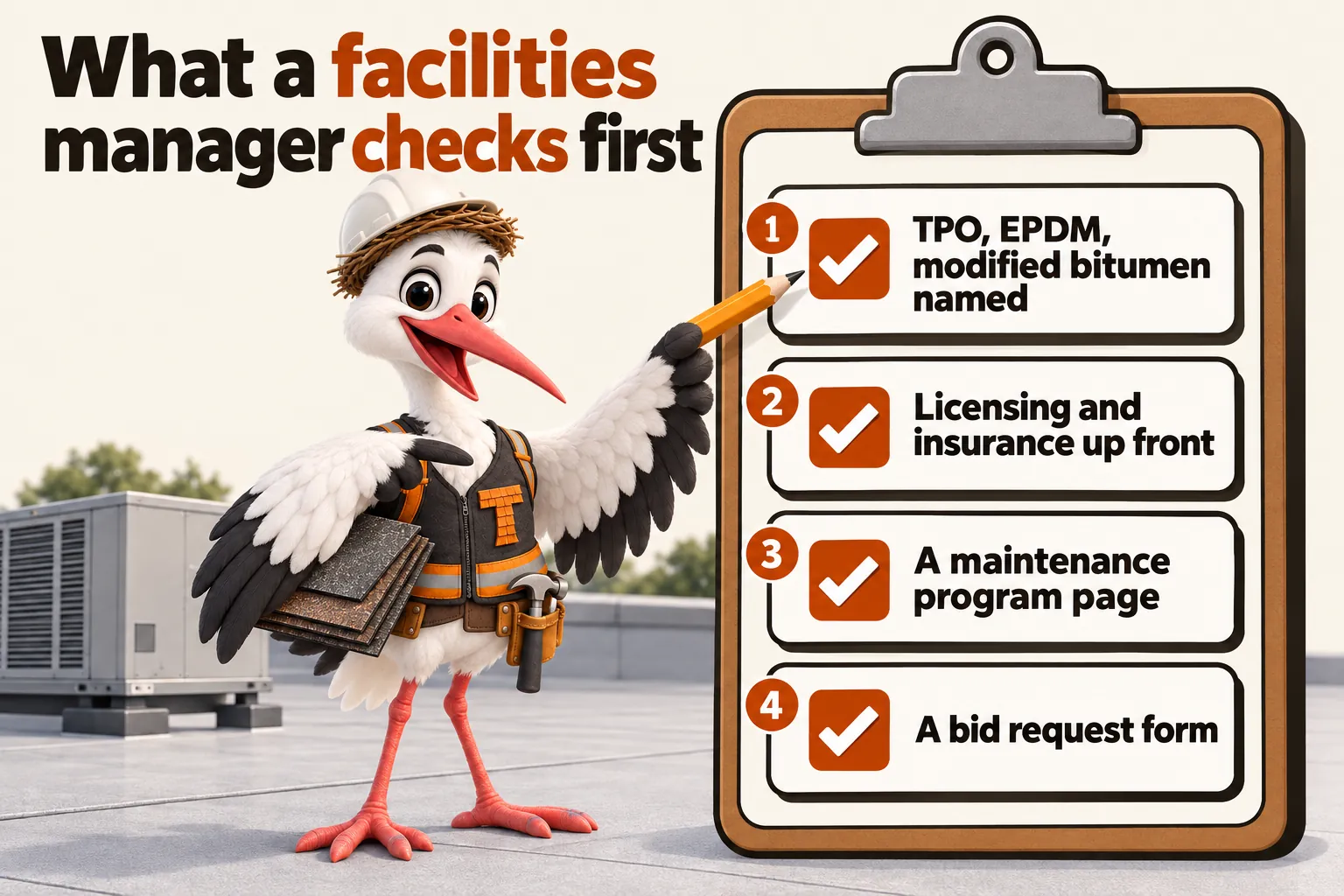
The design favors restraint over decoration: clear section headers for each roofing system you install, a scale of project examples from small repairs to full re-roofs, and a straightforward bid request form rather than a chatty contact widget. Trust here comes from specificity and organization, not from warmth.
No stock photography of unrelated office buildings, no vague "commercial and residential" catch-all pages, and no urgency language that reads as a homeowner sales pitch. A commercial buyer is doing due diligence on a longer timeline, and the design is built to survive that scrutiny rather than to create false urgency.
TPO, EPDM, modified bitumen and metal retrofit each get their own page written for that system.
The credentials a facilities manager checks first, placed where they will actually see them.
Recurring inspection and maintenance contracts described clearly, separate from one-time project work.
Collects building type, approximate roof size and timeline so your estimator can scope before the site visit.
Written for the commercial property types common to that area rather than a generic county-wide claim.
Answer: everything on this page is part of every plan. Ridge adds the AI Engine, the receptionist, chat widget, missed-call text back and appointment booking, and Peak adds the Content Engine on top of that.
Deck
$127/ month
The website, built and managed: town and service pages, gallery, forms, hosting and 2 articles a week. Live in 7 days.
Ridge
$267/ month + usage
Everything in Deck, plus the AI Engine answering calls, chat and texts, and booking appointments. Live in 10 days.
Peak
$647/ month
Everything in Ridge, plus the Content Engine: 3 articles a week plus social posts and reels. Live in 15 days.
Every plan carries the $697 build fee, invoiced only after your site is live and approved, and 5 revisions a month completed within 2 to 5 working days. See the full plan comparison.
Answer: the change owners notice first is not the design, it is that the site starts producing inquiries they can act on.
Alfred Wentworth
Workshop coordinator, slate roof restoration specialists
Sioux Falls, SD
My first check was simple: open the roof repair visits page on a phone and try to get in touch. The essentials are within the first screen, with an obvious way to inquire. It is far more practical than the old page when we share it with a caller.
Mobile navigation and page layout for roof repair visits
Slate roof restoration specialists Omaha, Nebraska
20 working days
Roof leak detection and repair service Salem, Oregon
25 working days
Chimney and leadwork roofing contractor Plano, Texas
10 working days
Usually yes, and they read it for specifics: membrane systems, project scale, licensing, insurance and safety. A facilities manager is assembling a shortlist, and a site that cannot demonstrate the system they need is dropped before a call ever happens.
Yes. Projects can be described by building type, approximate roof area, system installed and timeline without naming the owner. Many commercial clients prefer that, and it still gives a reader the scale they are checking for.
It collects the building type, the approximate roof size, the membrane if known and the project timeline, then routes to your estimator. It is a scoping tool rather than a lead magnet.
Yes, and they are worth having. Recurring inspection and maintenance work has a different buyer and a different sales cycle from a project reroof, so it gets its own page and its own request path.
Yes, split at the navigation and the home page so neither audience has to wade through the other's content. Both tracks share the brand, the domain and the search authority.
Yes. We typically structure this as a clear split in the navigation and homepage, with commercial-specific pages for membrane types and bid requests kept separate from residential repair and replacement pages, so neither audience wades through the other's content.
Yes, if you provide them during onboarding. Many facilities managers check this before anything else, so we place it prominently rather than in small print.
The form can be built to accept an attachment, or route to an email address that supports one, depending on your CRM. We confirm the exact setup during onboarding.
Ten comparison pages cover the other ways a roofing company can get this done, including when the other option is the better fit.
A live walk-through of the site you would get, in about 30 minutes. Plans from $127 a month, the $697 build fee invoiced only after launch, domain and hosting included.
Book a demoOr email and a person replies within one working day.
GetRoofingWebsite uses the cookies below. Necessary cookies keep the site working and cannot be turned off.
Saved on this device only. Press Esc to close.